
REGIONAL CITIES BEARING THE BRUNT OF THE FUEL CRISIS - MINNS GOVERNMENT’S LAST BUDGET MUST ACT
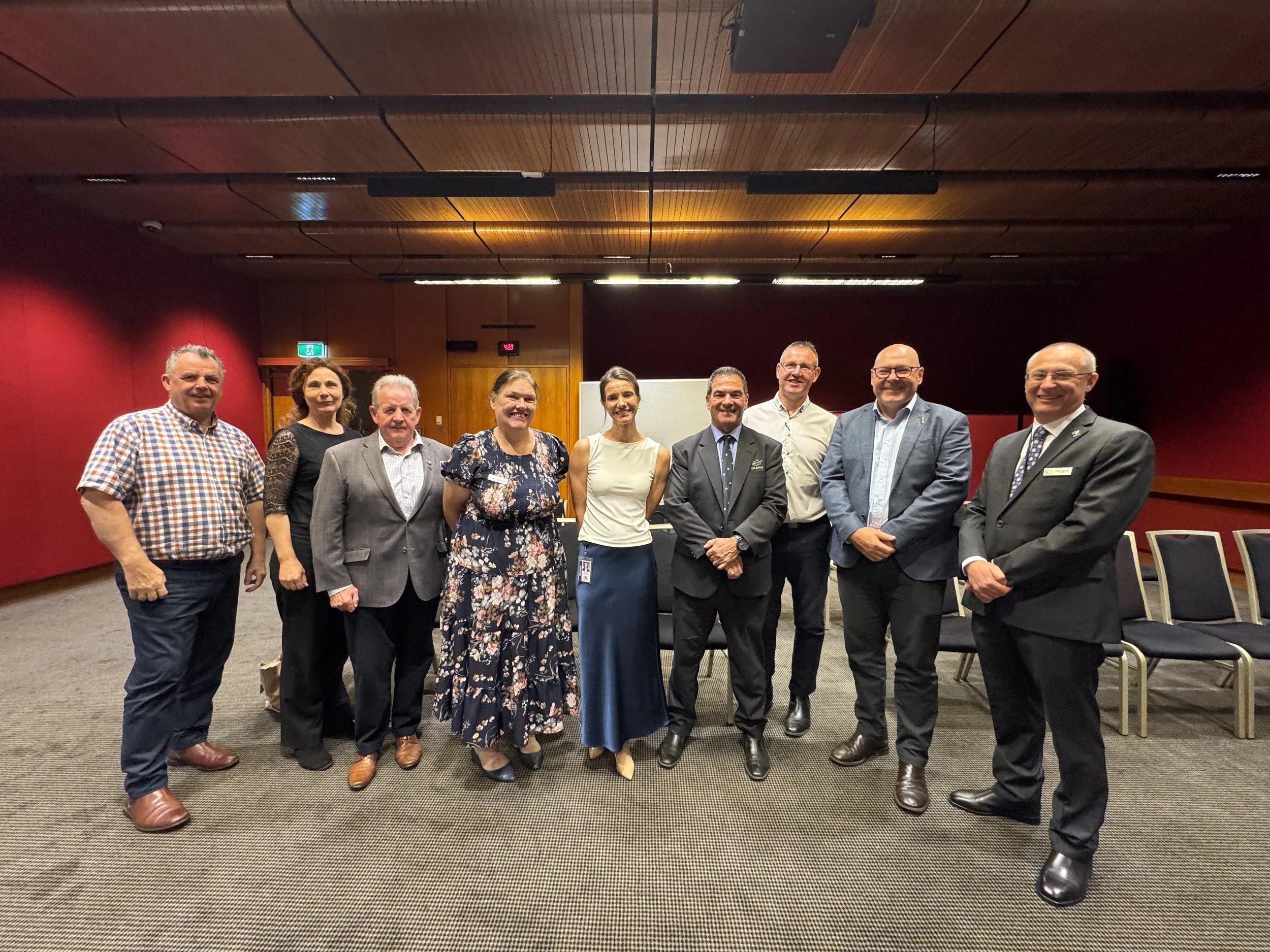
RCNSW Members with the NSW Minister for Water and Minister for Housing, the Hon. Rose Jackson, MLC
(L-R) Cr Dallas Tout (Mayor, Wagga Wagga), Cr Chris Cherry (Mayor, Tweed Shire), Cr Robert “Stumpy” Taylor (Mayor, Bathurst), Cr Nina Dillon (Mayor, Goulburn Mulwaree), the Hon. Rose Jackson, MLC, Cr Russell Webb (Mayor, Tamworth), Cr Tony Mileto (Mayor, Orange), Cr Doug Curran (Mayor, Griffith City), Cr Steve Krieg (Chair of RCNSW, Mayor of Lismore), Cr Joshua Black (Mayor, Dubbo).
Regional Cities New South Wales (RCNSW) says the Minns Government’s final Budget before the election is a defining moment to address the growing inequity facing regional communities, inequity now being accelerated by the growing national fuel crisis.
With high fuel prices and shortages, regional households, councils and businesses are absorbing costs that metropolitan areas do not face. RCNSW warns that without targeted investment in fundamentals like housing, water infrastructure and freight and roads, the Budget risks locking in long-term disadvantage for the regional cities that keep NSW moving.
Chair of Regional Cities NSW and Mayor of Lismore City Council, Councillor Steve Krieg, said the message is clear, the fuel crisis is not just a cost-of-living issue experienced at the bowser.
“Every part of regional life is touched by fuel,” Cr Krieg said.
“When freight slows, supermarket prices rise. When fuel costs spike, road maintenance blows out. When construction becomes more expensive, housing supply stalls even further. And when councils can’t afford to run water treatment plants or cart emergency supplies, communities are put at risk.
“This Budget is about choices. Choices that can ease pressure on regional communities, or choices that entrench the inequity people are already living with every day.”
Regional Cities NSW took this message to Parliament House recently, meeting with government and opposition leaders to make the case for targeted investment.
RCNSW’s 2026–27 Pre-Budget Submission highlights a widening gap between rapid regional population growth and the infrastructure needed to support it. Fuel-driven cost increases are now compounding these pressures:
● Transport costs are rising faster in regional NSW, where long distances and limited public transport make households and businesses more exposed.
● Freight costs are flowing directly into food, construction materials and essential goods, driving up the cost of living.
● Councils face escalating costs for road repairs, waste services, water treatment and emergency responses, all of which rely on fuel-intensive operations.
● Housing construction costs are rising, slowing the delivery of new homes and worsening already tight vacancy rates.
Cr Krieg said regional NSW is central to the State’s economic performance but is being held back by underinvestment at the very moment costs are surging.
“Regional NSW produces a third of the State’s goods and drives a significant share of economic activity, but the systems that support that growth are under real pressure.”
RCNSW’s 2026–27 Pre-Budget Submission priorities
Housing
RCNSW urges a focus on unlocking housing supply with regional NSW house prices growing faster annually than Sydney and rental vacancies under 1% in many areas.
Policy recommendations include funding enabling infrastructure to unlock land, acceleration of social and affordable housing and boosting of regional planning capability to address speed of approvals and alternative housing supply.
Water
Water security is a constraint on the continued growth of regional NSW with regional cities managing ageing infrastructure, higher compliance requirements and increasing climate variability. There is currently a $1 billion backlog in water infrastructure and fuel costs are increasing the price of water cartage, treatment and emergency response. More than 50 regional towns have faced water stress.
RCNSW recommends ongoing funding for the Safe and Secure Water Program targeting at risk-regional water infrastructure and the Regional Water Efficiency and Sustainability Program. RCNSW also recommends new funding for immediate investment in per and polyfluroalkyl (PFAS) safeguards.
Freight and Roads
Transport and freight networks are under pressure with infrastructure not keeping pace with domestic land freight volume, expected to grow by around 80 percent between 2011 and 2031 according to Infrastructure Australia.
RCNSW recommends the $350 million in funding for 10 priority freight pinch point projects outlined in its Regional Transport Pinch Point Program report and the integration of these business case findings NSW freight infrastructure investment prioritisation and implementation planning
Cr Krieg said the upcoming Budget will send a clear signal about the Government’s priorities and its commitment to regional communities.
“This is a moment that matters.
“The Government can choose to back regional NSW or leave communities to carry these pressures on their own.
“The time to act is now,” Cr Krieg said.
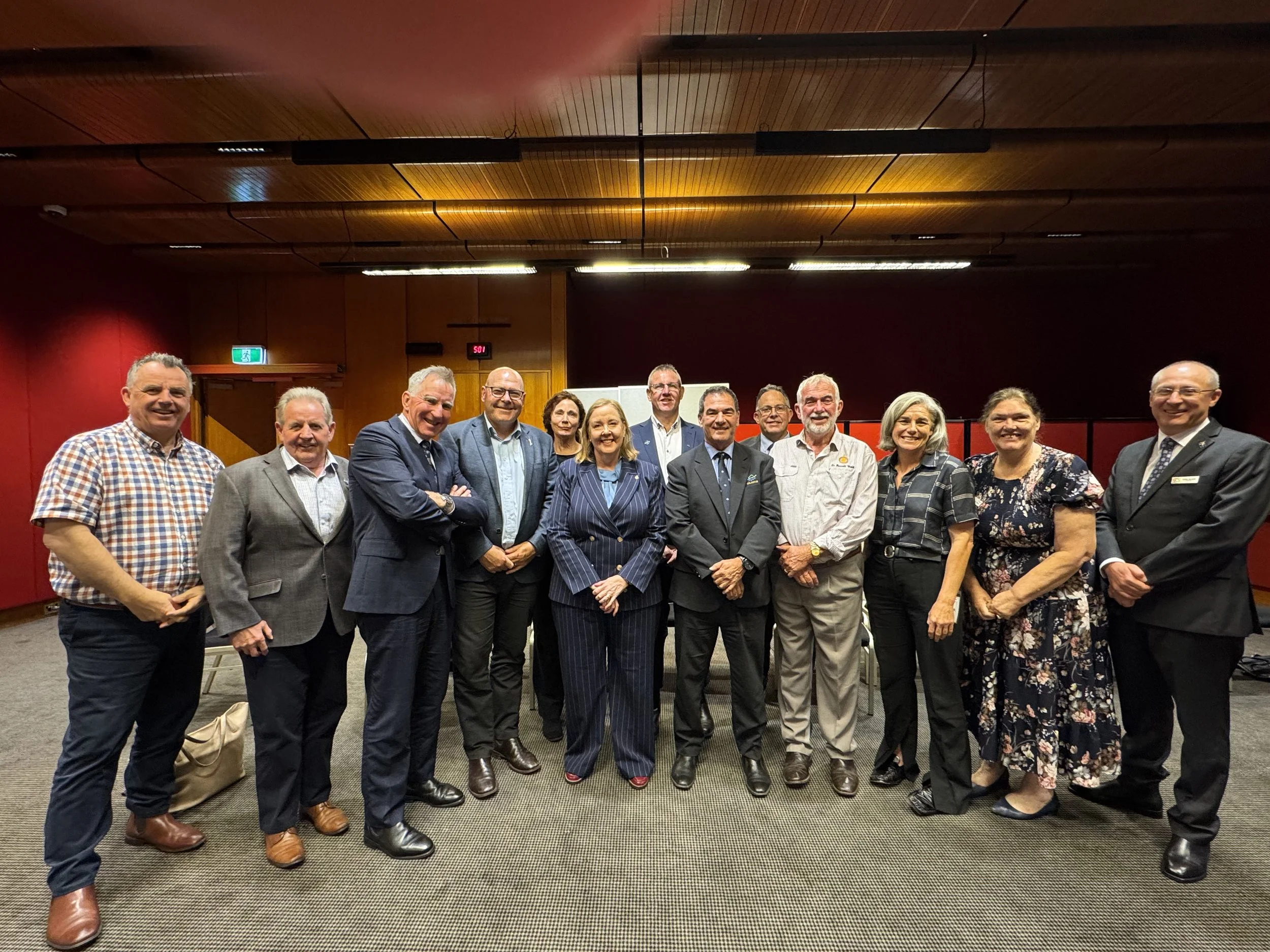
RCNSW Members with the NSW Minister for Roads and NSW Minister for Regional Transport, the Hon. Jenny Aitchison MP
(L-R) Cr Dallas Tout (Mayor, Wagga Wagga), Cr Robert “Stumpy” Taylor (Mayor, Bathurst), Cr Kevin Mack (Mayor, Albury), Cr Steve Krieg (Chair of RCNSW, Mayor of Lismore), Cr Chris Cherry (Mayor, Tweed Shire), the Hon. Jenny Aitchison MP, Cr Doug Curran (Mayor, Griffith City),Cr Tony Mileto (Mayor, Orange), Mr Scott Maunder (CEO of Orange City Council), Cr Russell Webb (Mayor, Tamworth), Cr Nikki Williams (Mayor, Coffs Harbour), Cr Nina Dillon (Mayor, Goulburn Mulwaree), Cr Joshua Black (Mayor, Dubbo).